Thursday, April 17, 2008

Writing for Magazines & Literary Journals

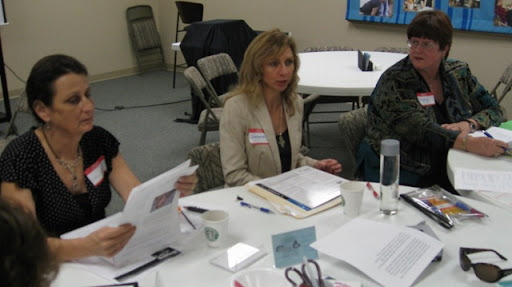
This evening, Inez Holger covered the basics of writing for magazine publication, a venue that can add valuable writing credentials to your resume. Here are her top six tips:

  1. Identify your writing style
  2. Identify your market
  3. Match 'em up
  4. Study your intended publication
  5. Shift your style
  6. Submit, submit, submit

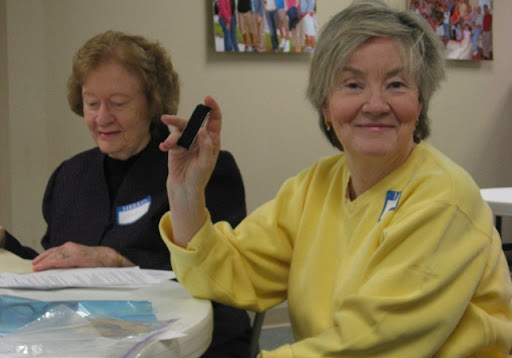
IMG_3138

Identify Your Writing Style

What kind of writer are you? It’s important to identify the type of writing you do so that you can find a magazine that fits your style. The number one complaint from editors is that writers send material that does not “fit” their publication. In other words, don’t send sci-fi to Guideposts. Some categories to consider:

  • Essays
  • Humor
  • Short story (fiction)
  • Spiritual
  • Reporting (facts only)
  • Anecdotal
  • Creative non-fiction (apply literary techniques to non-fiction)
  • Intellectual (In-depth analysis of complex topics)

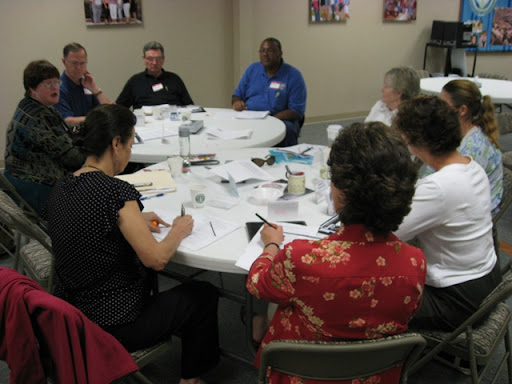
clip_image002

Identify Your Market

Once you have a grasp of the style of writing that you gravitate toward, you can then hone in on one or two of the HUNDREDS of markets looking for your work. For instance, in the market reference books listed below, you’ll find extensive lists of types of publications. For instance:

  • Adventure Nonfiction Travel
  • Arts Parenting Trade
  • Business Poetry Women’s Issues
  • Christian Regional (your part of the USA)
  • Children Religion
  • Cooking Science Fiction
  • Diet/Nutrition Senior Citizen
  • Family Short Stories
  • Men’s Issues Self Help
  • A Christian marketing manual lists the following (partial listing!):
  • Church History Fillers (really short pieces)
  • Christian Home schooling Inner Life
  • Current/Social Issues Missions
  • Devotional Personal Growth
  • Doctrinal Prayer
  • Encouragement Social Justice
  • Essays Short Story
  • Healing Take-Home Papers
  • Humor Women’s Issues

Match “Em Up

If you always write funny pieces about your kids, then you can check out the markets on “Family,” or “Parenting.” Oh, you like to write stories FOR children. Check out the “Children” and “Teen/Young Adult” categories. Look under “Humor” just in case.

Now that you have a general idea, let’s get down to work.

clip_image004

Study Your Intended Publication

You’ve chosen “Highlights Magazine” and “Pockets.” Should you just go ahead and send whatever you’ve written? Not exactly.

1. Obtain writer’s guidelines

Most of these are on magazine web sites or on writer’s web sites.

The guidelines tell you what the publisher wants, the word count allowed, themes for certain months, when to submit, how to submit.

2. Read at least 3 copies of the magazine, which you can find at the public library, at book-store magazine racks, at church libraries, in

the doctor’s office! Request copies from the publication itself.

By studying what they publish, you’ll know if you truly can

write for them. You’ll find out if the editor is interested in pieces with a touch of humor or prefers anecdotes, especially from beginning writers. You often have to start with small pieces before the editor will trust you with bigger ones. Perhaps you aren’t quite up to their level of writing yet, but you can make a mental note and aim for the future.

3. For an in-depth look at a column or regular feature of a magazine, try

the following:

Take 4 colored markers and highlight these specifics as you read –

  • Quotes
  • Names and titles
  • Facts, statistics, technical lingo
  • Figurative language and structural details

Be sure that your article includes the same features.

Shift Your Style

As you study the magazine and writer’s guidelines, you find that your pieces always tend to have a word count of 2,000. They want 1,000. Start cutting. You write well for Catholic Digest but if you really want to send the piece to Guideposts, you might have to cut some references that are too denominationally specific. If you want to send the same piece to Reader’s Digest, you might need to take the same story and emphasize a different aspect (the adventure, instead of your biblical insight).

Tweak. Accommodate. In the process, you’ll get more practice writing!

If you don’t want to change anything, don’t send your piece anyway, hoping that the publisher will be so impressed that he/she will break his/her own rules.

Submit

Stick to the guidelines!!!!!!!!! Margins, paper, email, disk. SASE.

Stick it in the mail. clip_image006

Helpful Hints and Resources

  • Even though you are writing a book, consider magazine publications as a means to adding writing credits to your resume and as a possible means of opening doors with book publishers.
  • Consider writing for contests. The practice will improve your writing skills and who knows, you might even win.
  • You can check out back copies of magazines from the library.
  • “The Writer” has an ongoing updated list of markets and highlights a different market area each month. May 2008- History. Read the library copy instead of purchasing.
  • “The Writers’ Journal” has monthly market lists, with new magazines and very specific markets.
  • Consider trade magazines if you have particular expertise in an area. Agriculture, dentistry, retail, you name it.
  • Good web sites: www.writersdigest.com, http://www.pw.org/toolsforwriters, http://www.pwcwriters.org/links.htm
  • The following market guides will keep you busy:
  • Christian Writer’s Market Guide by Sally Stuart
  • The American Directory of Writer’s Guidelines
  • Writer’s Market (available for several genres)

Last of all, don’t underestimate your life experiences. You cook, you clean, you eat, you raise children, you garden, you collect coins or salt shakers, you fix cars, you have relatives, you feel pain, you love cheesecake, you’ve seen every George Lucas movie, you play guitar, you’ve been young and now you’re old. Nothing to write about? Think again.

About Inez Holger

Inez has written since elementary school, completing a book of poetry by ninth grade. Her nonfiction works have appeared in various publications such as The Upper Room, Greenprints, The Family and Parenting Treasures. She worked as a contributing editor for Jacksonville Sports Magazine and wrote weekly news articles and features for a local community newspaper.

For the past several years she has had the opportunity to tutor students from home schooled and public school backgrounds while working on a collection of family vignettes and a series of devotions for Christians struggling with their faith.


Total Attendees at today's meeting:  9

New members joining today:

Total current members: 10

Thursday, April 10, 2008

Plan to Write Every Day

Do you write every day? Join us on Thursday, April 10, to learn more about Buddy's tips on how you can incorporate writing into your schedule every day.

IMG_2991

Buddy Putman

Thursday, April 3, 2008

Want to Publish? Blog to Billions Every Day!

Do you have a desire to publish? By starting your own blog, you can start building your readership today. And you can start for free. More than a billion people worldwide are Internet users. You don't need a publisher to get your words out to the world! This evening we learned about the benefits of blogging. It's easy to set up. Even I could do it!

FCCW Debi Lorraine Mary IMG_2980 - Cropped

Debi Wilson, Lorraine Haataia, Mary McCormack


IMG_2986


Total Attendees at today's meeting:  10

Total current members: 11

Monday, March 31, 2008

Mowbray Designs Logo Options for FCCW

Word Weaver Officer, Al Mobray, designed a few sample logos for FCCW so we can brainstorm ideas for our image. Check these out! My favorite one is number... never mind, I'm not going to tell you. I look forward to putting it to a vote at our next meeting.

Thank you Al!

Dr Lorraine

FCCW Founder & President


FCCW1

Logo #1 


FCCW2

Logo #2


FCCW3 (2) 

Logo #3


FCCW5 (2)

Logo #4

Thursday, March 27, 2008

Johnson's System Helps Writers Organize and Prioritize

"Use electronic folders liberally," Jean recommends, "and don't keep hard copies." While working in the advertising industry, Jean developed a simple and effective three-step system to stay on top of all her writing projects. This evening she shared her three secrets that can help all writers improve their productivity.

Jean Johnson IMG_2947 - Cropped

Lavada Haupt & Jean Johnson

Jean tells writers to:

  1. Use folders liberally
  2. Use Excel as a giant notepad
  3. Back up often!

Use folders liberally

Have you ever wasted time looking for a chapter or an article that you wrote? If you apply Jean's system for managing your file folders, you can spend more time writing and less time searching for what you wrote.  Computer file manager programs display your file folders and file names alphabetically. Jean recommends that you use numbers before folder and file names  so that you can prioritize your projects like this:

+ 01  My novel

+ 02  My church essay

+ 03  My Rendell study

+04  Future Projects

+05  Past work

Use a two-digit format in case your list goes beyond ten and use the same directory line-up for your web Favorites to capture related web links and references. Renumber your folders as your priorities change. 

So let's assume that you're ready to start you work day on your top priority, your novel. So you click into the 01 My Novel folder where you see your progress:

+ 01  My novel

-00 Novel groundwork

- Chapter 01  Done

- Chapter 02  Done

- Chapter 03

          Chapter 03 Storyboard.xls

          Chapter 03 Text.doc

You left off on chapter 3, so you can begin working on chapter 4 or you can continue working on chapter 3 until it's complete. Jean stores a text file and an Excel storyboard for each chapter.

Use Excel as a Giant Notepad

Jean uses Excel's powerful color and drawing tools to map her stories and characters. She turns off the grid lines and then brings her story to life using colors, text boxes and connector lines. Excel provides thousands of rows and columns, enough for you to plot out the details of just about any story.

Back up Often

Don't count on your computer to start up the next time you're ready to work. Every computer will fail eventually--it's just a question of when. Be sure to back up your files regularly on a hard disk, a CD and/or on flash drives (a.k.a. pen drives or thumb drives). You can also back up your files by posting them on a web site. If you lose your data, it's your own fault!

Total Attendees at today's meeting:  7

Total current members: 11

Wednesday, March 19, 2008

Time Management for Writers

Can't seem to find the time to write? Is a busy daily schedule keeping your fingers off the keyboard, or a pen from your hand? "Carving out the time to write can be easy and fun," says Leech, now a full-time writer after 23 years as a journalist.

Larry began his speech by asking each of us to jot down our top two favorite writing topics on separate sheets of paper. He collected our #2 priority and tore those up and then he asked us to crumple up our #1 priority. An idea isn't worth any more than that crumpled paper, he suggests, unless we're working on it or writing about it. Nearly all the ideas we had today will be lost if we didn't take the time to record them.

If we don't free up some time in our calendar to write, then we probably won't get around to writing. "A one hour TV show can eat up about two hours of writing time," says Leech. First you start anticipating that you want to watch the show. You might get a drink and a snack before you sit down to watch TV and get distracted with several other activities in the process.  After the show is over it could take you a half hour to get yourself in the frame of mind to write.

Track Your Time For Two Weeks

Larry recommends tracking how you spend your time for two weeks. Note all the major activities that you're doing in either 15 or 30 minute increments. You need to do this every day throughout the day because you won't remember precisely what you were doing several hours after the time has passed.

"Most people neglect their health, their sleep and/or their relationships when they're trying to find more time in the day." Over time, any one of these can negatively influence your health or your relationships. At the end of the two weeks, analyze how you're spending your time and decide where and how you can make more time to write.  You may be surprised at how much time you can find in your days if you eliminate lower priority activities.

Everyone Gets 168 Hours A Week

Everyone has 168 hours a week to use or lose. "If God is calling you to write and you aren't, then you're filling your schedule with things that don't belong there," says Leech. "Only you can decide what changes you need to make." Be creative. Larry told the story of a mom who taught her young children that she needed ten minutes of quiet time every hour, without any distractions. By writing ten minutes every hour, day after day, she eventually became a published author.

When you're writing, be sure to limit your distractions. Shut down your e-mail and the internet. Turn off your cell phone. Let others know that  you are unavailable for ten minutes, thirty minutes, one hour or two hours. Only you can decide what will work best for you. Larry listens to rock music when he's writing a fast scene and slow music when he's working on a piece that's more serene.

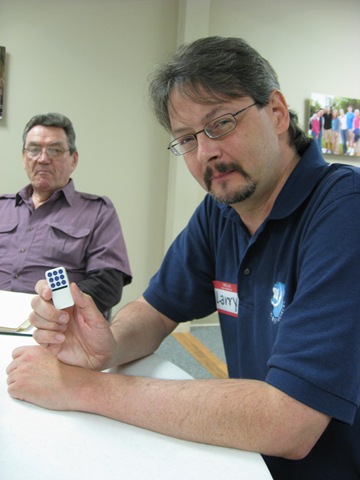
IMG_2922

Larry Leech with Domino showing all or nothing.

All or Nothing

Larry closed his speech by telling a story about going to a seminar where he was asked to select one domino among many. As the dominos were being passed around, he decided that he wanted to find one with nine dots on one side and none on the other. When the box came to him, he found one very quickly. Since then, this domino has reminded Larry that if he decides to do something, he's going to give it his all or he's not going to do it at all.

Larry Leech is a full-time freelance writer and the current president of Word Weavers, a Christian writing critique group in Orlando, Florida, with about 70 members.

Total Attendees at today's meeting:  6

New members joining today: Lavada Haupt

Total current members: 11

Thursday, March 13, 2008

Moore's Ten Disciplines for Writers

This evening Ron Moore described ten disciplines that have helped him write weekly sermons for the past several decades. If you focus on any one of these items, your writing career is sure to benefit.

IMG_2846 - Ron Moore Cropped

  1. Determine your goal. We need to know what we want to accomplish as a writer and what we want to accomplish through our readers.
  2. Know your audience. Whether the audience is familiar or unfamiliar, it's vital to understand their expectations.
  3. Set aside a day, time and place. Ron sets aside Thursday to write his sermons. He has a designated room with a computer and his books. He turns down Thursday invitations and delegates responsibility to his staff for everything that comes up on Thursdays.
  4. Reduce distractions. Ron's writing room includes a computer and books, but no TV, radio or telephone! This is his writing room. He also has a prayer chair in his home. The only time he sits in the prayer chair is when he prays.
  5. Develop a thesis statement. Every piece of writing, whether it's an article, a chapter or a book, must have one specific goal or theme that runs throughout. If you can't boil it down to one sentence yet, then you still have some work to do.
  6. Write, write, write. Ron encourages writers to read books about writing. He recommends On Writing by Stephen King, Before We Get Started: A Practical Memoir of the Writer's Life by Bret Lott, and Writing for the Soul: Instruction and Advice from an Extraordinary Writing Life.
  7. Revise, revise. Ron reminds everyone to appreciate how easy it is for us to revise now that we have word processors. Hemingway retyped one of his manuscripts 23 times!
  8. Collaborate. Get involved with a writers critique group where you can work on improving your writing on a regular basis.
  9. Read. It's important to read books similar to what you want to publish. Read good books in your field. Don't just read for pleasure, but read with the "eye of a writer."
  10. Rest. God told us to work for six days and then to rest with him on the seventh.

IMG_2850

Buddy Putman joined the FCCW leadership team this evening, volunteering for the Sergeant at Arms position. In this role, Buddy will do the following:

  • maintain & post club signs so that visitors can find us easily
  • maintain stopwatches and other equipment so that everything is presentable and in good working order
  • arrange & confirm the room is ready 15 minutes before meeting is scheduled to begin
  • works with MC to ensure that meeting starts on time
  • at end of meeting assures that room is left in same condition or better than when group arrived

Today I, Lorraine Haataia, President FCCW, opened a checking account for FCCW. Initial deposit was $160 from funds collected for membership dues, donations and door prize tickets. I need to file for a nonprofit tax ID and then follow up with the bank. The Treasurer will handle the account. Officers make financial decisions by consensus.

If you're interested in serving on the FCCW leadership team, we still have a few openings:

  • President: Lorraine Haataia
  • Vice President of Education: Mary McCormack
  • Vice President of Membership: Debi Wilson
  • Vice President of Public Relations: OPEN
  • Secretary: OPEN
  • Treasurer: Inez Holger
  • Sergeant at Arms: Buddy Putman
  • Web Master: OPEN

Officers meet the last Thursday of the month following our regular meeting, from 8:50-9:20 PM.

Total Attendees at today's meeting:  6

Total current members: 10

Thursday, March 6, 2008

Dr Lorraine Encourages Writers to Attend Conferences

If you want to be a writer, write. If you want to be a published author, go to writers conferences where you meet writers, authors, editors, literary agents and publishers. They can answer your questions and help you navigate your words into print, into magazines, into bookstores and into the hands of your readers. 

Over the past several years,  I've attended numerous conferences and just recently returned from the 21st Annual Florida Christian Writers Conference held at the Christian Retreat Conference Center in Bradenton, FL. First-timers may feel overwhelmed at a conference, but it's the best way to learn about the publishing world. Just dive in and start swimming. Attend lots of workshops. Ask a lot of questions and listen carefully.

What is your goal? I look forward to the day when I'm walking along a tropical shore line and I spot a stranger sitting in a beach chair reading my book. That's just part of my vision. I also look forward to the day when readers tell me that my books changed their lives for the better. I've read countless books that have improved my life and I'm very thankful for the authors who went to the trouble to organize and preserve their good ideas.

Ultimately, I'm looking forward to the day when I hear, "Well done my good and faithful servant. With you I am well pleased."

IMG_2795 - DrLorraine Speaking at FCCW

Dr Lorraine is the founder and president of First Coast Christian Writers. She is dedicated to providing educational opportunities, resources and effective critique group opportunities on a weekly basis to writers in NE Florida. FCCW leadership team shares a common vision of growing our group to 52 active members by December 31, 2008.

Total attendees at today's meeting: 4

New members joining today: Emory "Buddy" Putman

Total current members: 10

Thursday, February 28, 2008

Readers Judge Books by Their Covers

This evening Mary McCormack talked about the important elements of book covers and what it takes to grab buyers' attention. Mary shared fifteen book covers showing visual examples of what works and what doesn't.

IMG_2852 - Mary McCormack Mary 1


Total Attendees at today's meeting:  8

New members joining today: Jim Ovenshire

Total current members: 9

Thursday, February 21, 2008

Whitfield Puts a Humorous Twist on Grammar

Have you ever thought grammar was boring? You wouldn't think so if you were here tonight for Kristi's humorous approach to the rules of language. Kristi believes that English has been devolving  over the years, and we need to keep this in mind when we're writing. Rules are constantly changing  and each style guide has a different twist on the rules. Guidelines for web articles are not the same as those for books in print, for example.

IMG_2424

Do you ever end your sentences in prepositions? "That is the sort of bloody nonsense up with which I will not put!" Kristi says with her best Winston Churchill accent, as she describes some of the humorous moments in the history of language. Kristi's favorite grammar book is the Gregg Reference Manual by William Sabin. She encourages all writers to have a grammar reference in their writing toolbox.

IMG_2420

For those of you who like to work online, you may want to add the Jack Lynch Guide to Grammar and Style to your favorite links. For those of you who don't like to worry about grammar, you may want to hire an editor or befriend a writing partner who is passionate about saying things the right way.


Total attendees at today's meeting: 7

New members joining today: Debra Wilson, Kristi Whitfield, Jim Ovenshire

Total current members: 8

Thursday, February 14, 2008

FCCW Members Affirm Our Mission Statement

Although we had low attendance due to Valentine's Day, I took the opportunity to talk to participants about our mission statement that we adopted from Word Weavers:

The mission of First Coast Christian Writers is to support our members in finding their unique voices and to develop their writing to a publishable level.

I wanted to confirm that our group is in agreement with this mission. We had good discussion about what it means to be a "Christian" writers group and I believe that we came to consensus on a few things:

  • we like the mission statement
  • we need to keep our doors open to all members, just as the church is open to all who want to enter
  • we want to open and close our meetings with prayer and seek God's will and direction with our writing
  • we want to uphold integrity in all the written words that are brought to our critique sessions

The last point is an important one and deserves to be described in our guidelines. I will be sure that this is addressed in our guidelines.

This evening, we met in room 204 at Christ's Church. It's a larger room and we all felt that it was even more comfortable than our prior room 506.

IMG_2161 - Cropped

Since we're on the topic of Word Weavers, I'd like to introduce you to Eva Marie Everson, author, speaker, writer and founder of Word Weavers. She is the one front & center in the blue polo. This Word Weavers officers picture was taken four days ago at the Word Weavers annual writers retreat at Lake Yale, Florida.

Word Weaver members are all very thankful for Eva's dedication to growing such a supportive group for writers in the Orlando area. Eva has offered to come speak to FCCW, so you'll get to meet her in the near future. You probably also recognize Larry Leech, just behind Eva. He came up in support of our first FCCW meeting on January 24, 2007.

Cheri Cowell, in the black & white swirl top to the left of Eva, is the one who told me about Word Weavers when I was at the Glorieta Writers Conference in October, 2007. I'm so glad that I met Cheri and I'm especially thankful that she told me about Word Weavers.

Total attendees at today's meeting: 4

New members joining today: Jean Johnson, Nancy Jo Wilson

Total current members: 6

Thursday, February 7, 2008

Debra Wilson Explains the Why & How on Press Releases for Writers

This evening we had the opportunity to hear from PR expert, Debra Wilson, on the basics of the writing and distribution of press releases.

IMG_1836 

Debra provided the group with a basic press release format along with the following helpful tips:

  • Focus on what the reporter/reader will care about.
  • Grab their attention with your headline.
  • If at all possible, answer a "how" question as well as who, what, when, where and why.
  • The first paragraph is key so make it count.
  • Use a "banner" paragraph at the end of your release that describes your organization.
  • Keep it simple.
  • Never use more than two pages.
  • Keep in mind that editors receive hundreds of press releases.
  • Write in third person.
  • Study press releases that others have written (search online).
  • Make sure there are no spelling errors. Most releases are printed exactly as you send them.
  • Use a quote when possible.
  • Address your release to the appropriate person.
  • If you send via e-mail to multiple contacts, address them in a blind copy.
  • Give the reporter a few days before you follow up with them.
  • Be available to editors and reporters. If they call or e-mail you, respond quickly.
  • Don't give up!

Debra also serves as FCCW's VP of Membership. Thank you Debra for the great information.

This is the first evening that we started collecting membership dues. 

Total Attendees at today's meeting:  7

New members joining today: Ron Moore, Inez Holger, Mary McCormack, Lorraine Haataia

Total current members: 4